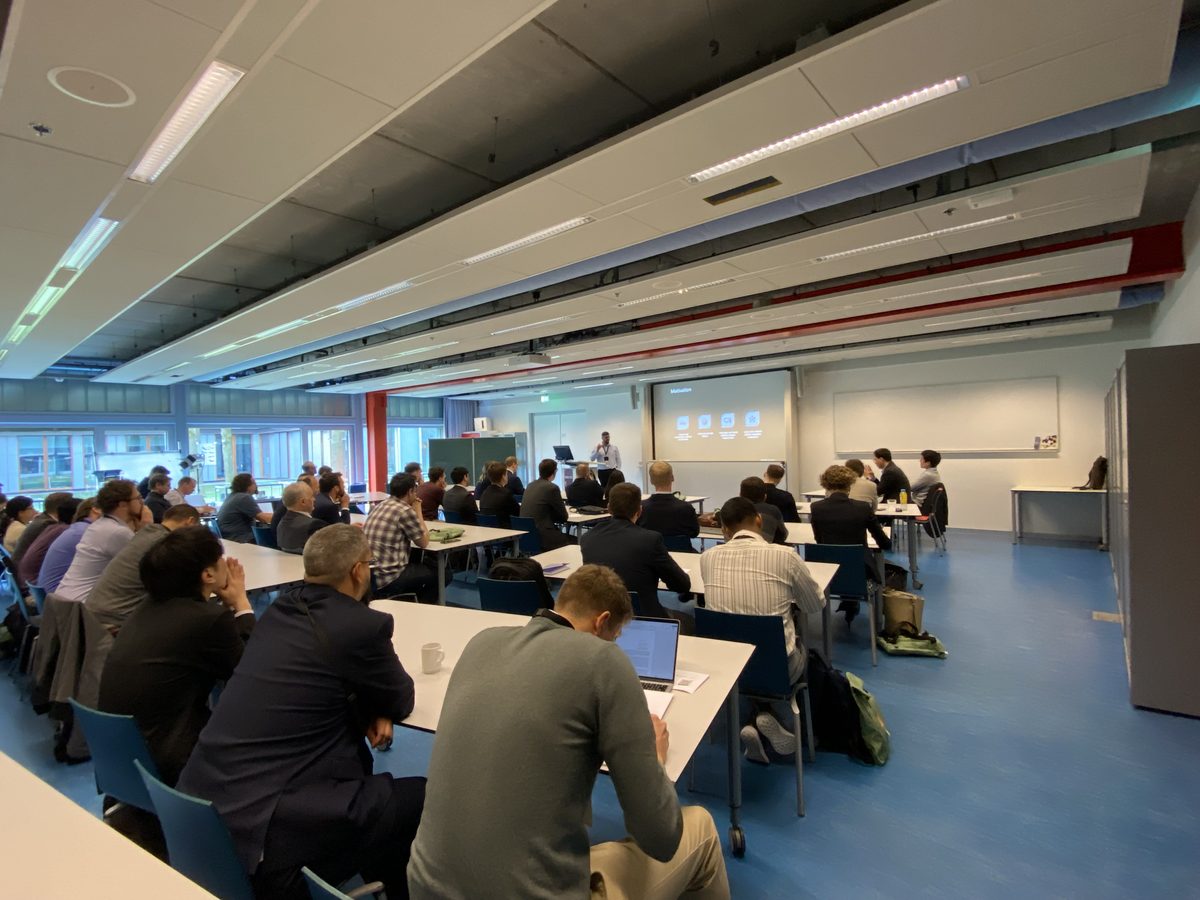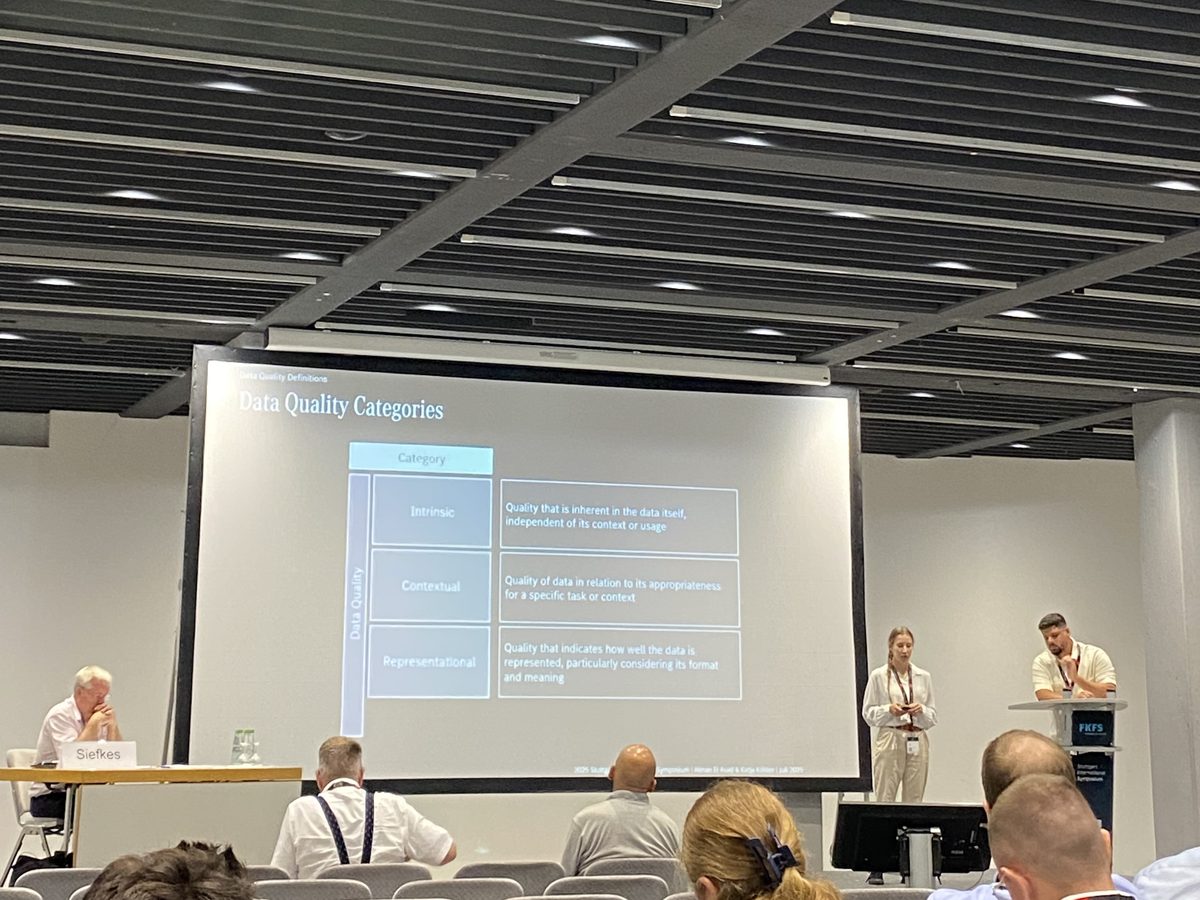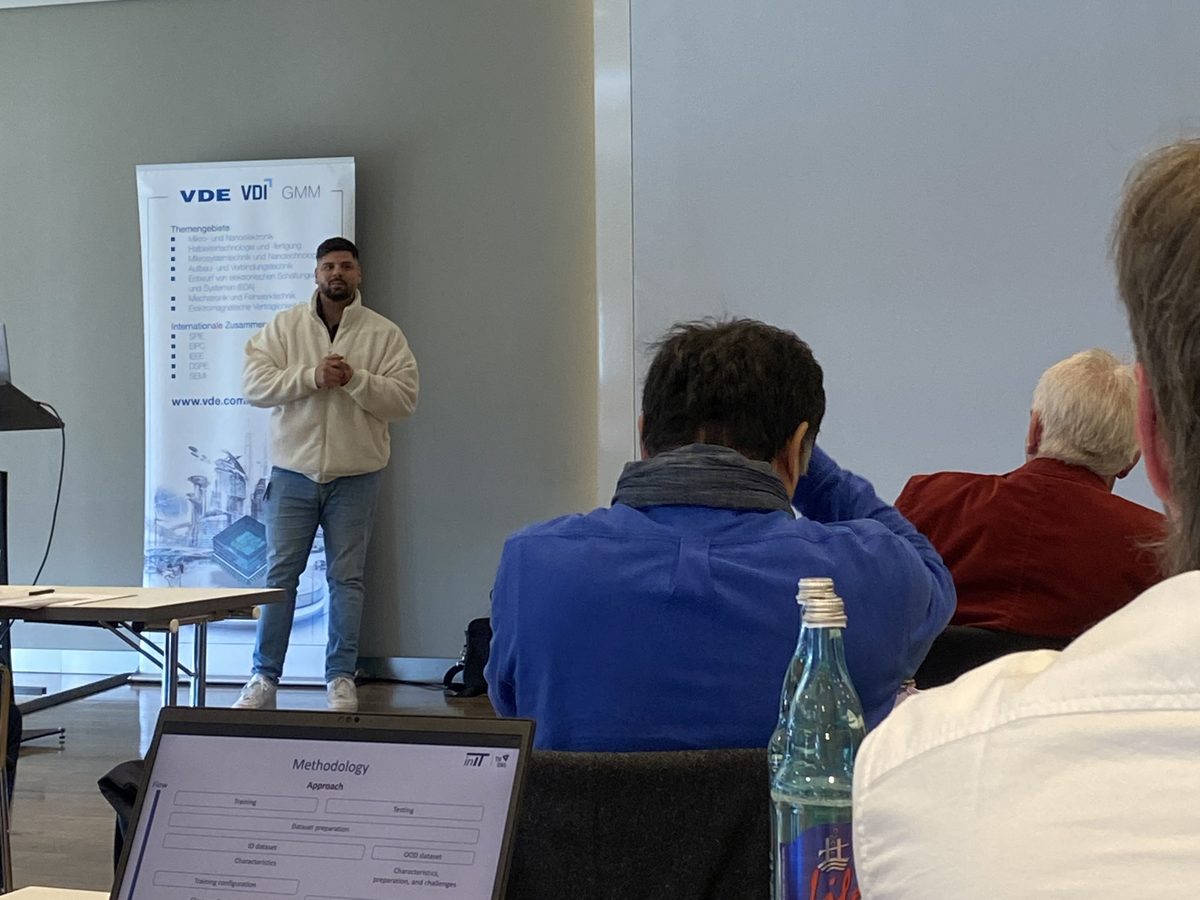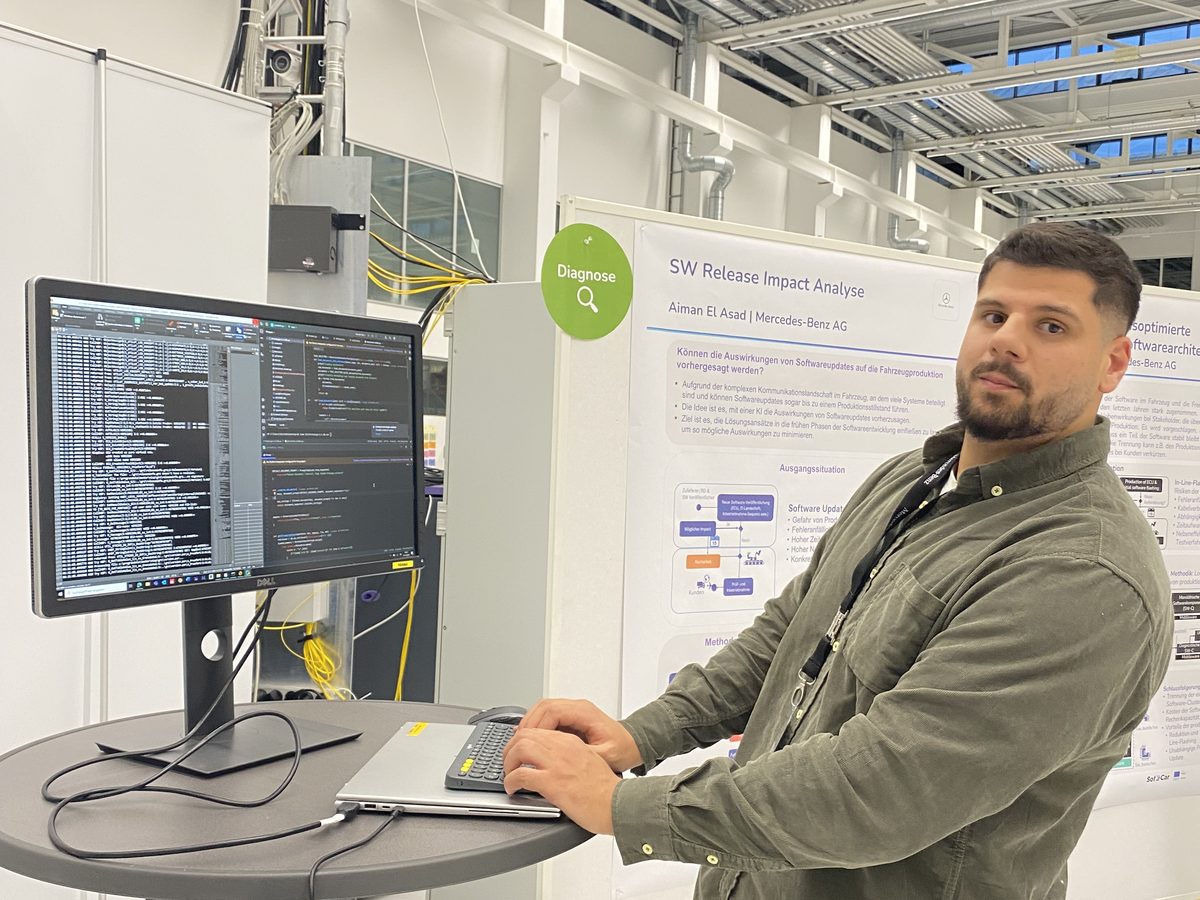
About me
I’m an industrial AI researcher with a background in physics, mathematics, software
engineering and automotive production. Since 2022 I have been working at Mercedes-Benz AG in
Sindelfingen, where I carried out my doctoral research within the SofDCar project in
cooperation with the University of Stuttgart. My dissertation, AI-Based Software Update
Release Impact Analysis, develops methods that estimate how a vehicle software update will
affect production before it is rolled out. I passed my doctoral examination in July 2026 with
the distinction magna cum laude.
My work sits at the intersection of three areas:
- Software-defined vehicles — release documentation, commissioning and testing data, software traceability.
- Production quality — First Time Quality (FTQ) as a measurable indicator of the impact of software updates.
- Large language models — retrieval-augmented generation, agentic systems and semantic clustering of production error messages.
Before moving into industrial AI I studied physics at RWTH Aachen University (B.Sc. in
experimental and M.Sc. in theoretical particle physics) alongside additional studies in mathematics,
and I taught theoretical physics to bachelor’s and master’s students for three years. I still
enjoy teaching: in spring 2026 I taught physics and mathematics for four months at a Gymnasium
(German secondary school).
Outside work I like cooking, art, photography, plants and reading.
CV
A summary of my CV. A full version is available on request via the contact page.
Work experience
-
Doctoral Researcher & Research Scientist, Industrial AI and Automotive Software
Mercedes-Benz AG, Sindelfingen, Germany
Developed AI-based methods for assessing the production impact of automotive software updates.
Designed data pipelines and evaluation methods for release documentation, commissioning data and
production-quality indicators, and built LLM-based retrieval and agent systems. Applied research
within the SofDCar project in cooperation with the University of Stuttgart and industrial partners.
-
Software Tester & Developer
andagon GmbH, Cologne, Germany
Developed and tested software components and automated test suites (aqua, Jira, STARC).
Education
-
Doctoral studies in engineering
University of Stuttgart, Germany
Dissertation: AI-Based Software Update Release Impact Analysis. Doctoral examination
passed magna cum laude.
-
M.Sc. Physics
RWTH Aachen University, Germany
Specialisation in theoretical particle physics; concurrent studies in mathematics.
-
B.Sc. Physics
RWTH Aachen University, Germany
Specialisation in experimental particle physics.
Teaching
-
Physics and Mathematics Teacher (fixed-term)
Christian-Rohlfs-Gymnasium, Hagen, Germany
Independently planned and delivered eleven lessons per week (physics, plus mathematics support classes).
-
Tutor in Theoretical Physics
RWTH Aachen University, Germany
Taught bachelor’s and master’s students and led a semester-long tutorial in theoretical mechanics.
Skills
- Programming
- Python (NumPy, pandas, scikit-learn, PyTorch, TensorFlow), SQL, Spark, C++, CUDA, Java, LaTeX
- Platforms & tools
- Azure Databricks, Azure Machine Learning, MLflow, Git, CI/CD, MLOps, LangChain, LangGraph, Hugging Face, vector databases
- AI & machine learning
- Industrial AI, large language models, retrieval-augmented generation, agentic systems, explainable AI, NLP, clustering, data engineering
- Automotive
- Software updates, production quality, testing and commissioning, root-cause analysis, software traceability, release impact analysis, production data analytics
- Certificates
- ISTQB® Certified Tester · aqua ALM · English for Academic Purposes I (C1), University of Stuttgart
- Languages
- German (native), Arabic (native), English (C1)
Publications
Peer-reviewed publications, manuscripts under review and conference contributions. Where available, titles link to the publisher’s page (DOI).
First-author publications
-
Quantifying the Impact of Software Updates through First Time Quality in Automotive Production (opens in a new tab)
A. El Asad, K. Köhler, M. Hahn, H.-C. Reuss
SAE Technical Paper 2026-01-0786, Stuttgart International Symposium, 2026
-
Strategies for Improving Data Management in Automotive Testing and Commissioning Processes (opens in a new tab)
A. El Asad, K. Köhler, M. Hahn, H.-C. Reuss
SAE Technical Paper 2025-01-0277, Stuttgart International Symposium, 2025
-
Advancing Automotive Production: An LLM-based Impact Analysis for Software Updates (opens in a new tab)
A. El Asad, M. Hahn, Y. Zhai, H.-C. Reuss
Procedia CIRP, vol. 134, pp. 127–132, 2025
Under review
-
An Industrial AI Framework for Automotive Software Traceability
S. Aghaei*, A. El Asad*, E. Daub, F. Ansari (*shared first authorship)
Journal manuscript under review, 2026
Conference contributions
-
An LLM-Based Approach for Semantic Clustering of Vehicle Production Error Messages
A. El Asad, M. Hahn, H.-C. Reuss, E. Daub
Poster, Automotive meets Electronics & Control (AmEC) 2026, VDE/VDI-GMM, Dortmund
Co-authored publications
-
Production-Optimized Automotive Software Architecture: Theory and Applications (opens in a new tab)
Y. Zhai, M. Beck, A. El Asad, K. Köhler, M. Hahn, E. Sax
IEEE Transactions on Industrial Informatics, vol. 22, no. 5, pp. 3741–3752, 2026
-
Generating Machine-Processable Specifications from Natural Language Using Large Language Models in Automotive Commissioning and Testing (opens in a new tab)
K. Köhler, A. El Asad, M. Hahn, H.-C. Reuss
SAE Technical Paper 2026-01-0768, Stuttgart International Symposium, 2026
Projects
Open-source projects from my spare time. All code is on GitHub (opens in a new tab).
gpu-kernel-lab
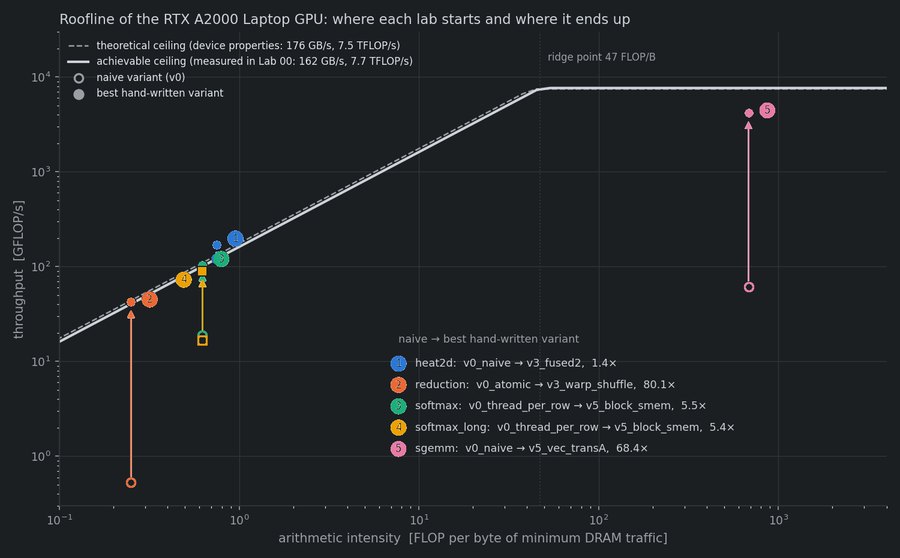
Roofline-driven CUDA kernel optimisation. Four workloads — 2D stencil, reduction, softmax and
SGEMM — are tuned in documented steps, each measured against the hardware ceiling it is
bound by (SGEMM reaches 97% of cuBLAS on an RTX A2000 Laptop GPU). Hypotheses that turned out
wrong stay in the code and are labelled as such — the method is the point, not the final numbers.
Source on GitHub (opens in a new tab)
torch-roofline
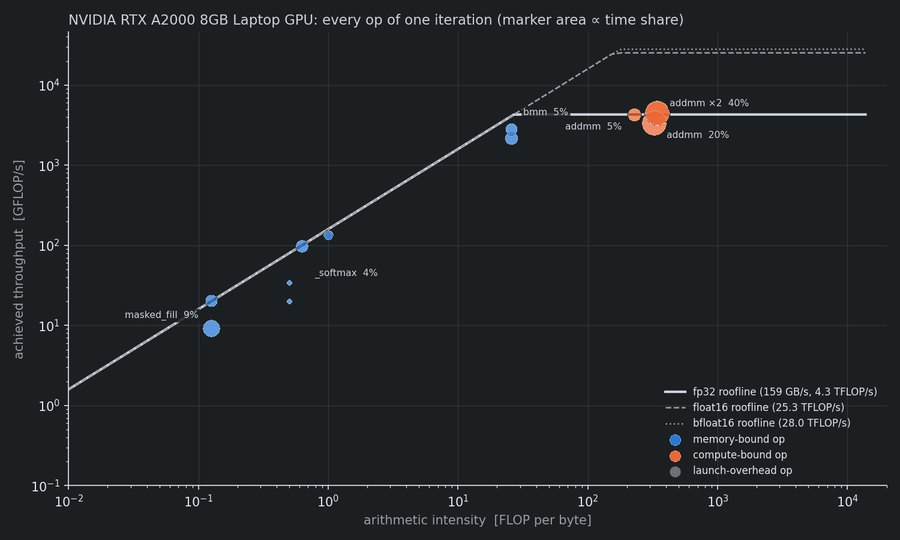
What is your PyTorch model actually bound by? A per-operator roofline profiler: it runs a model once,
intercepts every operator, records time, FLOPs and bytes moved, and places each op on the measured
roofline of your device. Reports memory- vs compute-bound ops, fusion candidates and whether lower
precision, torch.compile or bigger batches are the right lever. CUDA, Apple MPS and CPU.
Source on GitHub (opens in a new tab)
The easiest way to reach me is by e-mail. I’m happy to talk about industrial AI, software-defined vehicles, LLM systems or teaching.
Legal notice
Imprint
This is a private, non-commercial website.
Dr. Aiman El Asad
Germany
E-mail: aimanelasad@yahoo.de
Privacy
Controller for data processing on this website is the person named in the imprint above.
Hosting. This website is hosted by GitHub, Inc., 88 Colin P. Kelly Jr. Street, San Francisco,
CA 94107, USA (“GitHub Pages”). When you visit the site, GitHub’s servers
automatically process technical data that your browser transmits (IP address, date and time of the
request, requested URL, browser type and version, operating system, referrer) in server log files.
This processing is necessary to deliver the website securely and is based on Art. 6 (1)(f) GDPR
(legitimate interest in a secure and efficient provision of the site). GitHub is certified under the
EU-US Data Privacy Framework. Details: GitHub Privacy Statement (opens in a new tab).
No tracking. This website does not use cookies, analytics, tracking pixels, embedded social
media or content from third-party servers. The web font is served from this site itself.
Contact by e-mail. If you write to me, I process the data you provide (e-mail address,
content of the message) solely to answer your request (Art. 6 (1)(b) and (f) GDPR). Messages are
deleted once the matter is settled, unless legal retention periods apply.
Your rights. Under the GDPR you have the right to access, rectification, erasure, restriction of
processing, data portability and objection (Art. 15–21 GDPR), and the right to lodge a
complaint with a supervisory authority (Art. 77 GDPR).